The Back Row Is a Leadership Position

Photo: user:AngMoKio, CC BY-SA 2.5, via Wikimedia Commons
The folding chairs are the first thing you notice. Then the clock on the wall, leaning a few degrees off true, and the agenda packet of a body whose name most residents could not recite. This is a planning commission work session in a suburb where the biggest story of the year is a rezoning nobody will hear about until it is finished. There are nine people in the room and two of them are staff.
It is not a glamorous place to build a public life. It is, however, one of the most instructive. Emerging leaders are often drawn to the microphone, the petition, the march — and those matter. But before any of them, there is a quieter practice that separates politicians who know their communities from politicians who merely represent them: showing up where you are not asked to speak.
The Meetings Nobody Films
Every county has a tier of governance that generates almost no press and most of the decisions. Water district boards set the rates. Metropolitan planning organizations allocate the transportation dollars. School facilities committees decide which building gets air conditioning. County budget work sessions determine whether the library keeps its weekend hours.
These meetings are dull in the way that infrastructure is dull — until it fails. For an aspiring leader, their value is diagnostic. Attend six of them and you will learn who the staff trust, which board members do their homework, and which public controversies are actually three years old and still unresolved. You cannot acquire that map by reading a platform.
Why the Microphone Distorts
Public comment has a selection problem. The people who show up to speak are the people with the time, the confidence, and the sharpest grievance — which means a council chamber can easily give a distorted reading of a neighborhood. Staff know this. Experienced members know this. They read the record with an eye trained to notice who is missing from it.
The quiet constituent learns to notice the same things. A room of four dozen speakers opposing a project tells you something about mobilization. The fourteen letters in the file from residents on a street that has flooded twice in a decade tells you something about need. Learning to weigh the second against the first is the beginning of judgment.
A Method for the Quiet Constituent
Listening at this level is a discipline, not a mood. A few practices make it portable:
- Keep a notebook with a fixed format: date, body, item, who spoke for and against, what staff recommended, how it ended, and the one sentence that stuck with you.
- Stay through the boring items. The vote on an easement is where you learn how a member thinks.
- Ask two questions of anyone who will talk to you: “What would you do if you were in the chair?” and “Who else should I be talking to?” Neither is a request for a favor, and both produce a map.
- Introduce yourself without an ask. “I live on the east side and I am trying to learn how the budget works.” People answer that. They are wary of people who only appear when they want something.
After six months, the notebook turns into an asset. A pattern emerges: the same drainage complaint raised at a neighborhood association, a council meeting, and a flood control district hearing. When a concern surfaces in three different venues with three different vocabularies, it is not noise. It is a priority that no one has organized yet.
Volume Is Not Weight
One of the harder lessons is that a frequent speaker is not automatically a representative one. Some residents are simply practiced, and their practice earns them disproportionate airtime. A young leader who has been quietly attending will eventually be able to say something that a seasoned member rarely hears: that the loudest voice on a given night was speaking for a block, not a neighborhood, and that the people most affected never received the notice.
Say it carefully, and only when it is true. Credibility in these rooms is spent quickly and earned slowly.
Turn Listening Into Trust
Disciplined listening produces obligations. Follow up with the staff member who walked you through the capital plan; send a note when a project you tracked is finally funded. Volunteer on the committee that does the tedious work — the one that meets at 7:30 in the morning. Shoe leather in the off-year matters more than enthusiasm in the election year, because that is when the relationships form that no campaign can manufacture.
The measure of progress is simple and unglamorous: when a council member sees you in the back row, they stop by to ask what you have been hearing. At that point you are no longer an observer of the process. You are part of its memory.
When the Seat Is Yours
Aspiring leaders sometimes worry that years of listening will look like years of nothing. The opposite is true. The candidate who can describe the county budget in plain language, name the three neighborhoods most affected by the last rezoning, and explain why a particular board member voted the way she did is not inexperienced. That candidate is unusually prepared.
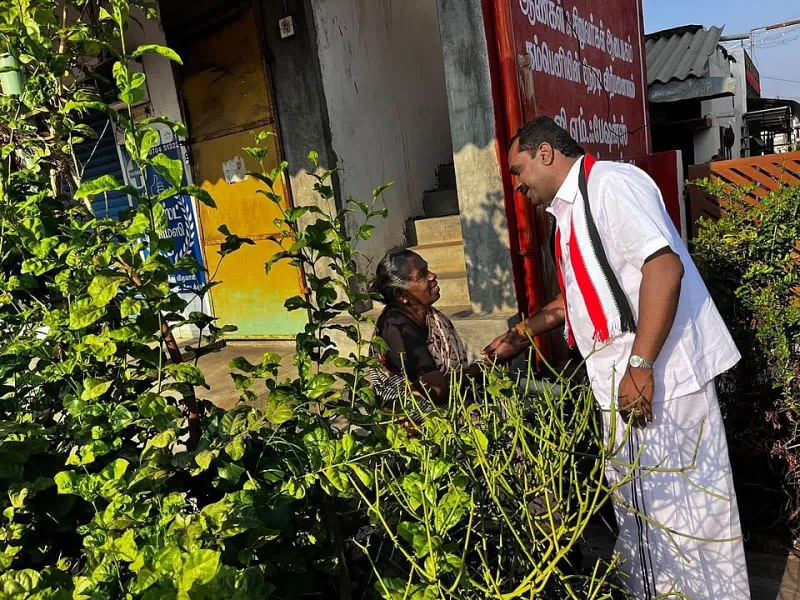
And once elected, the habit holds. Representation is not a series of positions announced from a dais; it is a practice of returning to the back row, in as many rooms as possible, to hear what the agenda did not anticipate. Leadership in a community rarely begins with a speech. It begins with a folding chair, a notebook, and the patience to stay until the last item is called.